


What should you know about C3G
and primary IC-MPGN?
C3G (C3 glomerulopathy) and primary IC-MPGN (immune-complex membranoproliferative glomerulonephritis) are rare, serious kidney diseases. C3G and IC-MPGN affect about 5,000 people in the US.
You may not feel any changes while C3G or
primary IC-MPGN progress and cause:
Many people with C3G progress to
kidney failure within 10 years:
~%
%
If you progress to kidney failure, dialysis or a kidney transplant may be required. A kidney transplant does not always prevent the disease from coming back.
In a retrospective study of 18 adults with C3G who received a kidney transplant
89%
had their disease return, within 33 days after transplantation
Kidney damage cannot be reversed. Act early and talk to your doctor today.
Actor portrayal.
How C3G and primary IC-MPGN impact the body

Actor portrayal.
C3G and primary IC-MPGN happen when part of your immune system, called the complement systemComplement systemThe complement system is a part of your immune system that helps protect you from infections. When it’s working correctly, it attacks harmful bacteria. But when it becomes overactivated, it can lead to C3 fragment buildup., becomes overactivated.
Normally, the complement system helps defend against infections and gets rid of damaged cells. But in these diseases, it isn’t regulated properly, causing it to become overactivated.
The role of C3 in kidney damage
A protein called C3 plays a major role in complement system overactivation.
Unchecked complement system overactivation can cause high levels of protein in your urine (proteinuriaProteinuriaProteinuria is the presence of too much protein in your urine. It means your kidneys’ filters aren’t working properly and are letting protein leak out. Proteinuria isn’t a disease itself, but it can be a sign of kidney damage or other health issues.). This can lead to declining kidney function and potentially kidney failure.
A retrospective study of 149 patients with C3G or IC-MPGN found that a reduction of at least 50% in proteinuria at 12 months was associated with a lower risk of progression to kidney failureKidney failureKidney failure happens when your kidneys lose most or all of their ability to filter waste and fluids from your blood. This can lead to serious health problems and may require dialysis or a kidney transplant.*
*A retrospective study looks at existing patient records; this was not a new treatment trial. The results showed a link between lower protein in the urine and better kidney outcomes. This does not prove that lowering protein will always prevent kidney failure.
Testing: your path to diagnosis

Actor portrayal.
As part of your diagnosis, many tests were likely performed, including:
- Blood and urine tests to check
- Protein levels or proteinuria (measured by urine protein-to-creatinine ratio, or uPCRuPCRuPCR is a test that measures the amount of protein in your urine compared to creatinine. It helps detect kidney problems without needing a full-day urine collection.)
- Kidney function (measured by estimated glomerular filtration rate, or eGFReGFReGFR is a blood test that shows how well your kidneys are filtering waste. A higher number means better kidney function.)
- C3 levels
- A kidney biopsy to check for C3 staining
- Your doctor used a special dye on kidney tissue obtained from a biopsy to look at the amount of C3 fragment buildup
- This is the only way to confirm a C3G or primary IC-MPGN diagnosis
Doctors use C3 staining from a kidney biopsy to assess how much C3 has built up in the kidneys
Examples of C3 staining from kidney biopsies:
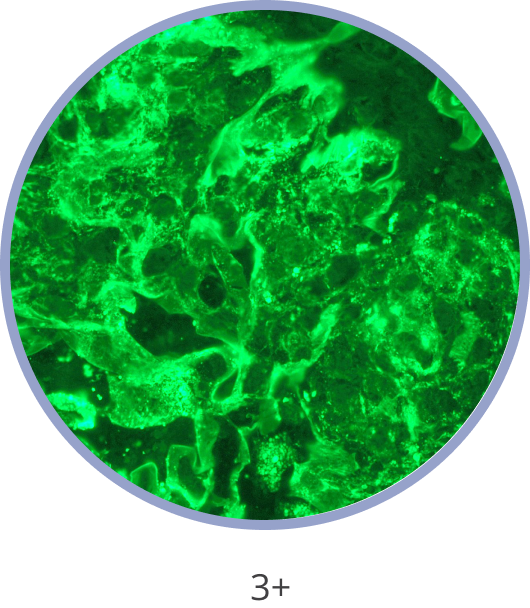
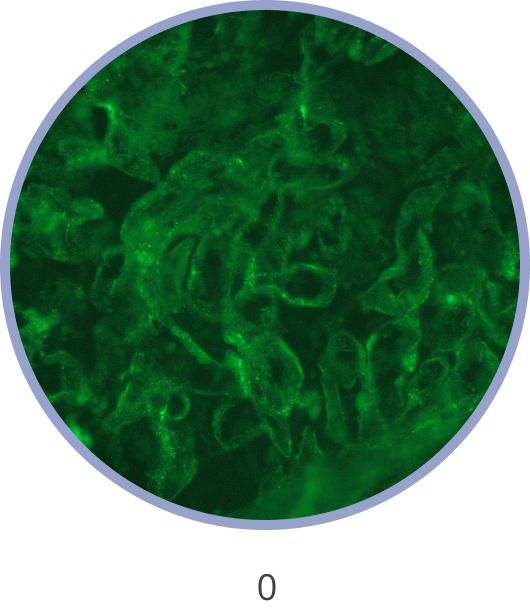
Microscopic images: Courtesy of Patrick D. Walker, MD, Senior Renal Pathologist at Arkana Laboratories.
C3 levels are measured on a scale from 0 to
3+, called “intensity levels.”
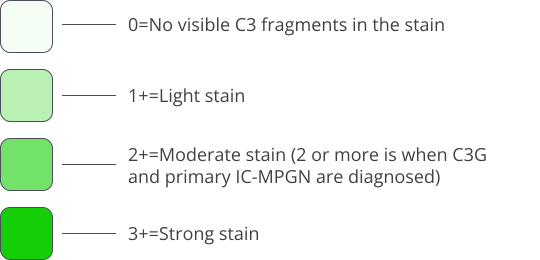
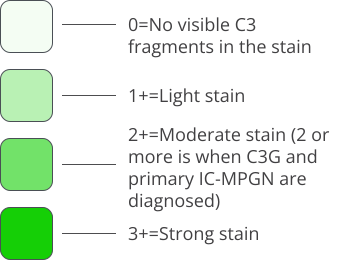
This image is for illustrative purposes only.
The intensity scale is a visual representation that does not reflect actual biopsy results.
eGFR=estimated glomerular filtration rate.