C3G/primary IC-MPGN

For questions about financial assistance, call 1-866-MY-APL-ASSIST

EMPAVELI was studied in
a broad range of patients with C3G and primary IC-MPGN

See how EMPAVELI performed in the 3 key measures that matter

Alyssa, a real teen who's taken EMPAVELI

*These results represent smaller groups of patients for which the study was not designed to prove results.

The VALIANT trial is the largest and broadest Phase 3 clinical trial that evaluated the use of EMPAVELI in C3G and primary IC-MPGN

It looked at the use of EMPAVELI in both adults and children (aged 12 years and older), whether they had their own kidney (native) with C3G or primary IC-MPGN or C3G after a transplant.

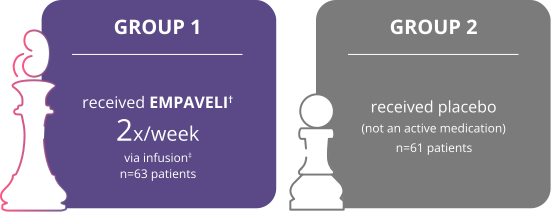
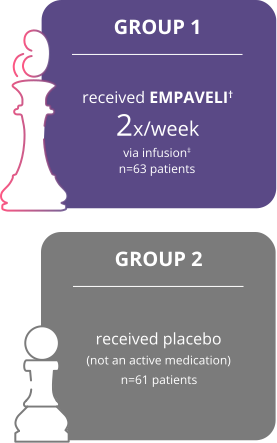
The VALIANT trial lasted 26 weeks and included 124 patients who were randomly placed into 2 groups:

Both groups continued their usual supportive care during the study.§

Quinn, a real teen who’s taken EMPAVELI

Children weighing 30 to <35 kg received 540 mg/10 mL for the first 2 doses, then 648 mg/12 mL. Children weighing 35 to <50 kg received 648 mg/12 mL for the first dose, then 810 mg/15 mL. Adults and children weighing ≥50 kg received the recommended dose of 1080 mg/20 mL.

An infusion under the skin.

§People in the control group continued taking stable doses of their medications (like angiotensin-converting enzyme inhibitors [ACEis], angiotensin receptor blockers [ARBs], sodium glucose cotransporter 2 inhibitors [SGLT2is], immunosuppressants, and corticosteroids). Immunosuppressant doses (eg, steroids no higher than 20 mg daily, mycophenolate mofetil, tacrolimus) had to be stable during the 26-week trial and at least 12 weeks beforehand.

Who participated in the VALIANT trial?

The VALIANT trial included a diverse group of people living with C3G or primary IC-MPGN.

Meredith, a real adult who’s taken EMPAVELI

Participant overview

Average age: 26 years (ranged from 12-74)

Gender: 43% male, 57% female

Race/ethnicity:

  • 73% White
  • 15% Asian
  • Less than 1% Black or African American
  • 11% others
What were the goals of the VALIANT trial?

The primary goal of the VALIANT trial was reduction in proteinuriaProteinuriaProteinuria is the presence of too much protein in your urine. It means your kidneys’ filters aren’t working properly and are letting protein leak out. Proteinuria isn’t a disease itself, but it can be a sign of kidney damage or other health issues. (uPCR)uPCRuPCR is a test that measures the amount of protein in your urine compared to creatinine. It helps detect kidney problems without needing a full-day urine collection. from baseline to Week 26

Secondary goals from baseline to Week 26 included:

Both stabilized kidney function (measured by eGFReGFReGFR is a blood test that shows how well your kidneys are filtering waste. A higher number means better kidney function. reduction of 15% or less) and
reduced proteinuria (measured by uPCR reduction of at least 50%)
Change in kidney function (measured by eGFR)

The effects of EMPAVELI in the body (pharmacodynamics):

Reduced C3 fragment buildupC3 fragment buildupC3 fragment buildup happens when pieces of a protein from your immune system (called C3) collect in your kidneys. This buildup can damage your kidneys in C3G and is thought to do the same in primary IC-MPGN.

Stay informed on your journey

Sign up to receive updates, resources, and information about EMPAVELI

Get connected

How EMPAVELI performed across 3 key measures that matter

Doctors track these key measures of disease activity to understand how your kidneys
are responding to treatment.

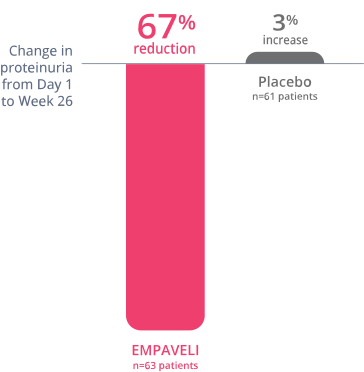
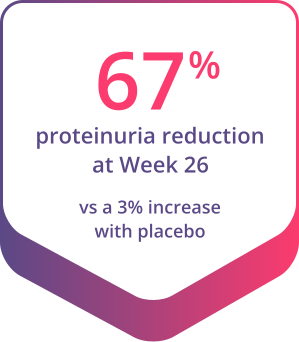
People treated with EMPAVELI saw significantly lower
proteinuria at Week 26

Key measure #1: Reduced proteinuria

Primary goal

Game-changing proteinuria reduction

High protein levels in your urine (proteinuria) are a sign your kidneys aren’t working properly. EMPAVELI helps significantly lower proteinuria, which can help slow disease progression.

Kerry, the
mother of Quinn
who’s taken
EMPAVELI

Since Quinn started EMPAVELI, we
saw an improvement in his
labs…specifically, his

uPCR was significantly reduced. It
was surprising and a huge relief
all at the same time.

Individual experiences may vary.
Key measure #2: Stabilized kidney function

Secondary goals

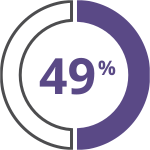
31 out of 63 people

Nearly half of people (31 out of 63 people) saw both stabilization of kidney function (measured by eGFR reduction of 15% or less) and reduction of proteinuria by 50% or more by Week 26, compared to 3% of the placebo group (2 out of 61 people)*

  • 68% (43 out of 63 people) had stable eGFR at Week 26 with EMPAVELI, compared to 59% of the placebo group (36 out of 61 people)
  • 60% (38 out of 63 people) had 50% or more reduction in proteinuria at Week 26 with EMPAVELI, compared to 5% of the placebo group (3 out of 61 people)

Change in eGFR over 26 weeks

Difference in eGFR of +6.31 mL/min/1.73 m2 between EMPAVELI and placebo at Week 26

*Composite renal endpoint. A composite renal endpoint combines multiple individual indicators of kidney function and disease progression into a single endpoint.

eGFR measures how well your kidneys function. Treatment with
EMPAVELI has been shown to help slow disease progression to protect kidney function.

Pharmacodynamic results*
Key measure #3: Reduced C3 fragment buildup
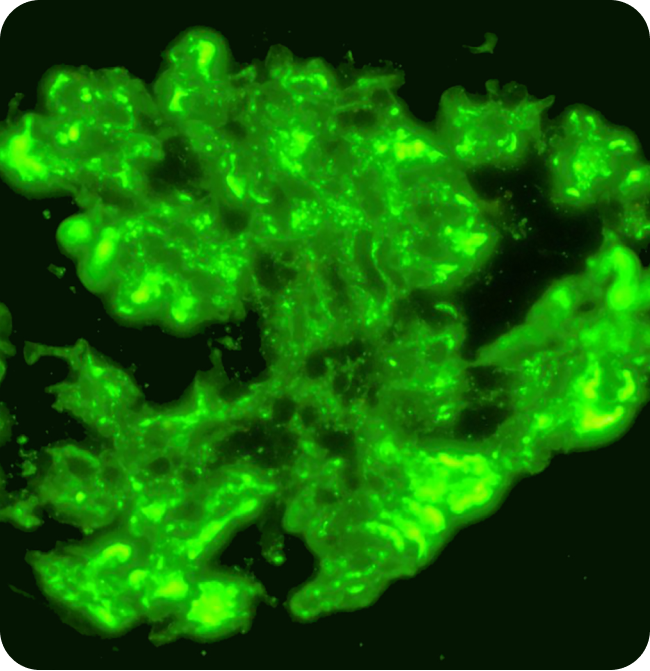
Baseline
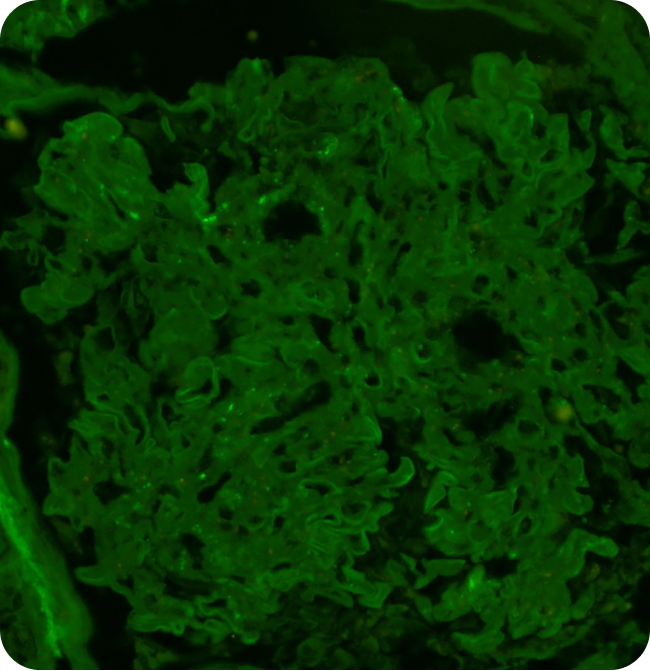
Week 26

Of people with evaluable kidney biopsies (n=69), 74% of those taking EMPAVELI (26 out of 35 people) had decreased C3 fragment detection by at least 2 intensity levels from baseline to Week 26 compared to 12% of the placebo group (4 out of 34 people)

71.4% of adults (25 out of 35 people) had no C3 fragments detected (0 staining) at Week 26 compared to 8.8% of the placebo group (3 out of 34 people)

Intensity levels reflect how much C3 is present. The higher your intensity reduction is, the clearer your kidneys
become of C3 fragments.

1-level intensity reduction=10x fewer C3 fragments

2-level intensity reduction=100x fewer C3 fragments

3-level intensity reduction=No detectable C3 fragments

Kidney biopsies from a person with post-transplant recurrent C3G. Images courtesy of Patrick D. Walker, MD,
Senior Renal Pathologist at Arkana Laboratories.

*Pharmacodynamic data help researchers understand how a medicine affects the body.

Evaluable patients included only adult patients. Kidney biopsies were not performed on pediatric patients.

C3 staining helps show how much C3 is built up in the kidneys.
High levels of C3 fragments may be a sign of ongoing disease activity.

Meredith, a real adult who’s taken EMPAVELI

I noticed a difference after using EMPAVELI. I started to feel like myself again—for the first time in years. My labs reflected the change, and my numbers started improving.

Individual experiences may vary.
EMPAVELI is a strong move you can make to stabilize kidney function and slow disease progression

Meredith, a real adult who’s taken EMPAVELI

Results seen in a smaller group of children and
teens aged 12 to 17 years

These results are based on a small group and are considered to be exploratory because the
study was not designed to show differences between EMPAVELI and placebo within these groups
of patients. More research is needed to better understand them.

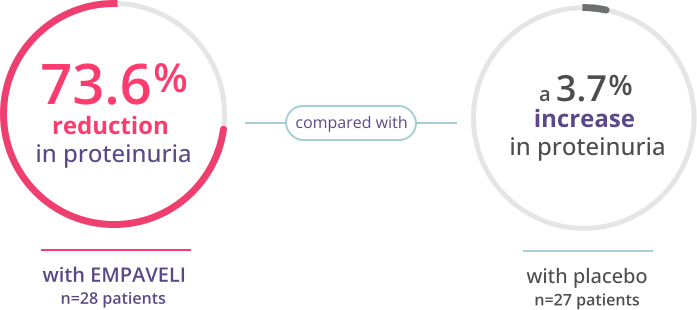
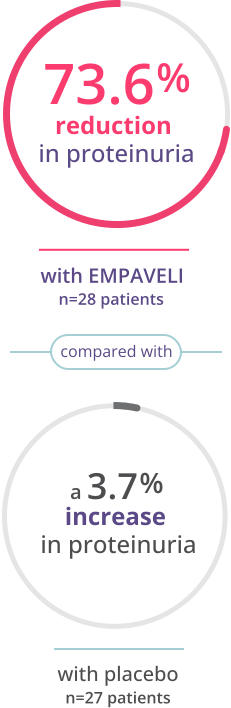
Children and teens had less protein in the urine at 26 weeks

From Day 1 to Week 26


Children and teens that achieved composite renal endpoint (measured by eGFR reduction of 15% or less) and reduced proteinuria by 50% or more at 26 weeks*

Over half (57.1%) of children
and teens achieved the composite
renal endpoint with EMPAVELI

(n=28 patients)


compared to 3.7% with placebo

(n=27 patients)

*Composite renal endpoint. A composite renal endpoint combines multiple individual indicators of kidney function and disease progression into a single endpoint.


Children and teens saw a change in eGFR at 6 months

Difference in eGFR of
+9.71 mL/min/1.73 m2
between EMPAVELI and
placebo at Week 26

Ready to talk to your child’s doctor about EMPAVELI?

Download the Doctor Discussion Guide to help you make the most of your next appointment.

Download the guide

Results seen in a smaller group of people with
recurrent C3G following a kidney transplant

These results are based on a small group and are considered to be exploratory because the
study was not designed to show differences between EMPAVELI and placebo within these groups
of patients. More research is needed to better understand them.

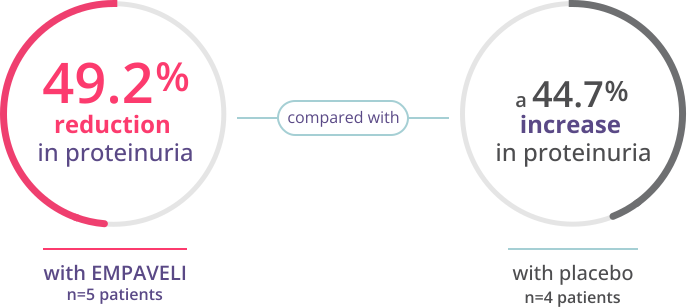
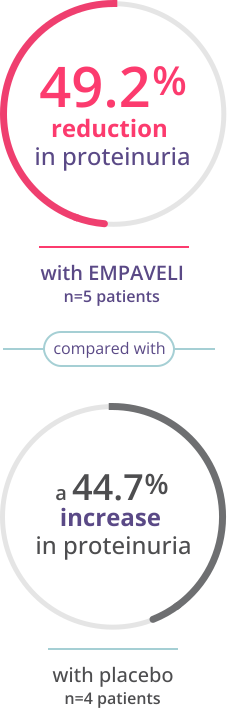
People with recurrent C3G following a kidney transplant had less protein in the urine at 26 weeks

From Day 1 to Week 26


People with recurrent C3G following a kidney transplant that achieved composite renal endpoint (measured by eGFR reduction of 15% or less) and
reduced proteinuria by 50% or more at Week 26*

60% of people achieved
the composite renal endpoint by
Week 26 with EMPAVELI


(n=5 patients)


compared to 0% with placebo

(n=4 patients)

*Composite renal endpoint. A composite renal endpoint combines multiple individual indicators of kidney function and disease progression into a single endpoint.


Change in eGFR observed at Week 26

Difference in eGFR of
+9.3 mL/min/1.73 m2
between EMPAVELI and
placebo at Week 26


Pharmacodynamic result

All patients whose C3G returned following a kidney transplant had reduced C3 staining by at least 2 intensity levels (OOM) at Week 26 with EMPAVELI

100% achieved reduced C3
fragment detection by Week 26
with EMPAVELI

(n=5 patients)


compared to 25% with placebo

(n=4 patients)

Pharmacodynamic data help researchers understand how a medicine affects the body.
In adults with evaluable baseline and Week 26 kidney biopsies.

Safety, effectiveness, and pharmacodynamic data of EMPAVELI in patients with recurrent IC-MPGN following kidney transplant have not been established.

Alyssa, a 
real teen who’s taken EMPAVELI

Alyssa, 
a real teen who’s taken EMPAVELI

C3G=C3 glomerulopathy; eGFR=estimated glomerular filtration rate; IC-MPGN=immune-complex membranoproliferative glomerulonephritis; uPCR=urine protein-to-creatinine ratio.

INDICATION AND IMPORTANT SAFETY INFORMATION

What is the most important information I should know about EMPAVELI?

EMPAVELI is a medicine that affects your immune system and may lower the ability of your immune system to fight infections.

EMPAVELI increases your chance of getting serious infections caused by encapsulated bacteria such as Streptococcus pneumoniae, Neisseria meningitidis, and Haemophilus influenzae type B. These serious infections may quickly become life-threatening or cause death if not recognized and treated early.

  1. You must complete or be up to date with the vaccines against Streptococcus pneumoniae and Neisseria meningitidis at least 2 weeks before your first dose of EMPAVELI.
  2. If you have not completed your vaccines and EMPAVELI must be started right away, you should receive the required vaccines as soon as possible.
  3. If you have not been vaccinated and EMPAVELI must be started right away, you should also receive antibiotics to take for as long as your healthcare provider tells you.
  4. If you have been vaccinated against these bacteria in the past, you might need additional vaccines before starting EMPAVELI. Your healthcare provider will decide if you need additional vaccines.
  5. Vaccines do not prevent all infections caused by encapsulated bacteria. Call your healthcare provider or get emergency medical care right away if you get any of these signs and symptoms of a serious infection:
    • fever with or without shivers or the chills
    • fever with chest pain and cough
    • fever with high heart rate
    • headache and a fever
    • confusion
    • clammy skin
    • fever and a rash
    • fever with breathlessness or fast breathing
    • headache with nausea or vomiting
    • headache with a stiff neck or stiff back
    • body aches with flu-like symptoms
    • eyes sensitive to light

Your healthcare provider will give you a Patient Safety Card about the risk of serious infections. Carry it with you at all times during treatment and for 2 months after your last EMPAVELI dose. Your risk of serious infections may continue for several weeks after your last dose of EMPAVELI. It is important to show this card to any healthcare provider who treats you. This will help them diagnose and treat you quickly.

EMPAVELI is only available through a program called the EMPAVELI Risk Evaluation and Mitigation Strategy (REMS). Before you can take EMPAVELI, your healthcare provider must enroll in the EMPAVELI REMS program, counsel you about the risk of serious infections caused by certain bacteria, give you information about the symptoms of serious infections, make sure that you are vaccinated against serious infections caused by encapsulated bacteria and that you receive antibiotics if you need to start EMPAVELI right away and you are not up to date on your vaccines, and give you a Patient Safety Card about your risk of serious infections.

Who should NOT take EMPAVELI?

Do not take EMPAVELI if you:

  • are allergic to pegcetacoplan or any of the ingredients in EMPAVELI.
  • have a serious infection caused by encapsulated bacteria, including Streptococcus pneumoniae, Neisseria meningitidis, and Haemophilus influenzae type B when you are starting EMPAVELI treatment.

Before you take EMPAVELI, tell your healthcare provider about all of your medical conditions, including if you:

  • have an infection or fever.
  • are pregnant or plan to become pregnant. EMPAVELI may harm your unborn baby. Females who are able to become pregnant should have a pregnancy test before starting treatment with EMPAVELI and use an effective method of birth control during treatment with EMPAVELI and for 40 days after the last dose.
  • are breastfeeding or plan to breastfeed. It is not known if EMPAVELI passes into your breast milk. You should not breastfeed during treatment with EMPAVELI and for 40 days after the last dose.

Tell your healthcare provider about all the vaccines you receive and medicines you take, including prescription and over-the-counter medicines, vitamins, and herbal supplements which could affect your treatment.

What are the possible side effects of EMPAVELI?

EMPAVELI can cause serious side effects including allergic reactions. Allergic reactions can happen during your EMPAVELI infusion and can be life-threatening. Stop your EMPAVELI infusion and get emergency medical care right away if you get any of these symptoms during your EMPAVELI infusion:

  • chest pain
  • trouble breathing or shortness of breath
  • wheezing
  • swelling of your face, tongue, or throat
  • feel dizzy or faint or pass out
  • fast heart rate
  • nausea or vomiting
  • feel confused or anxious
  • skin reactions, including rash, hives, and itching

The most common side effects in adults and children 12 years of age and older with C3G or primary IC-MPGN treated with EMPAVELI include injection-site reactions, fever, common cold, flu, cough, and nausea.

These are not all of the possible side effects of EMPAVELI. Tell your healthcare provider about any side effect that bothers you or that does not go away.

Call your healthcare provider for medical advice about side effects. You may report side effects to FDA at 1-800-FDA-1088 or www.fda.gov/medwatch.

What is EMPAVELI® (pegcetacoplan)?

EMPAVELI is a prescription medicine used to treat adults and children 12 years of age and older with a kidney disease called complement 3 glomerulopathy (C3G) or primary immune-complex membranoproliferative glomerulonephritis (IC-MPGN), to reduce levels of protein in the urine (proteinuria).

Please see full Prescribing Information, including Boxed WARNING regarding risk of serious infections, and Medication Guide for additional information.

Get connected

Get connected
C3G/Primary IC-MPGN

For questions about financial assistance, call 1-866-MY-APL-ASSIST

  • EXPAND
  • COLLAPSE

INDICATION AND IMPORTANT SAFETY INFORMATION

What is the most important information I should know about EMPAVELI?

EMPAVELI is a medicine that affects your immune system and may lower the ability of your immune system to fight infections.

EMPAVELI increases your chance of getting serious infections caused by encapsulated bacteria such as Streptococcus pneumoniae, Neisseria meningitidis, and Haemophilus influenzae type B. These serious infections may quickly become life-threatening or cause death if not recognized and treated early.

  1. You must complete or be up to date with the vaccines against Streptococcus pneumoniae and Neisseria meningitidis at least 2 weeks before your first dose of EMPAVELI.
  2. If you have not completed your vaccines and EMPAVELI must be started right away, you should receive the required vaccines as soon as possible.
  3. If you have not been vaccinated and EMPAVELI must be started right away, you should also receive antibiotics to take for as long as your healthcare provider tells you.
  4. If you have been vaccinated against these bacteria in the past, you might need additional vaccines before starting EMPAVELI. Your healthcare provider will decide if you need additional vaccines.
  5. Vaccines do not prevent all infections caused by encapsulated bacteria. Call your healthcare provider or get emergency medical care right away if you get any of these signs and symptoms of a serious infection:
    • fever with or without shivers or the chills
    • fever with chest pain and cough
    • fever with high heart rate
    • headache and a fever
    • confusion
    • clammy skin
    • fever and a rash
    • fever with breathlessness or fast breathing
    • headache with nausea or vomiting
    • headache with a stiff neck or stiff back
    • body aches with flu-like symptoms
    • eyes sensitive to light

Your healthcare provider will give you a Patient Safety Card about the risk of serious infections. Carry it with you at all times during treatment and for 2 months after your last EMPAVELI dose. Your risk of serious infections may continue for several weeks after your last dose of EMPAVELI. It is important to show this card to any healthcare provider who treats you. This will help them diagnose and treat you quickly.

EMPAVELI is only available through a program called the EMPAVELI Risk Evaluation and Mitigation Strategy (REMS). Before you can take EMPAVELI, your healthcare provider must enroll in the EMPAVELI REMS program, counsel you about the risk of serious infections caused by certain bacteria, give you information about the symptoms of serious infections, make sure that you are vaccinated against serious infections caused by encapsulated bacteria and that you receive antibiotics if you need to start EMPAVELI right away and you are not up to date on your vaccines, and give you a Patient Safety Card about your risk of serious infections.

Who should NOT take EMPAVELI?

Do not take EMPAVELI if you:

  • are allergic to pegcetacoplan or any of the ingredients in EMPAVELI.
  • have a serious infection caused by encapsulated bacteria, including Streptococcus pneumoniae, Neisseria meningitidis, and Haemophilus influenzae type B when you are starting EMPAVELI treatment.

Before you take EMPAVELI, tell your healthcare provider about all of your medical conditions, including if you:

  • have an infection or fever.
  • are pregnant or plan to become pregnant. EMPAVELI may harm your unborn baby. Females who are able to become pregnant should have a pregnancy test before starting treatment with EMPAVELI and use an effective method of birth control during treatment with EMPAVELI and for 40 days after the last dose.
  • are breastfeeding or plan to breastfeed. It is not known if EMPAVELI passes into your breast milk. You should not breastfeed during treatment with EMPAVELI and for 40 days after the last dose.

Tell your healthcare provider about all the vaccines you receive and medicines you take, including prescription and over-the-counter medicines, vitamins, and herbal supplements which could affect your treatment.

What are the possible side effects of EMPAVELI?

EMPAVELI can cause serious side effects including allergic reactions. Allergic reactions can happen during your EMPAVELI infusion and can be life-threatening. Stop your EMPAVELI infusion and get emergency medical care right away if you get any of these symptoms during your EMPAVELI infusion:

  • chest pain
  • trouble breathing or shortness of breath
  • wheezing
  • swelling of your face, tongue, or throat
  • feel dizzy or faint or pass out
  • fast heart rate
  • nausea or vomiting
  • feel confused or anxious
  • skin reactions, including rash, hives, and itching

The most common side effects in adults and children 12 years of age and older with C3G or primary IC-MPGN treated with EMPAVELI include injection-site reactions, fever, common cold, flu, cough, and nausea.

These are not all of the possible side effects of EMPAVELI. Tell your healthcare provider about any side effect that bothers you or that does not go away.

Call your healthcare provider for medical advice about side effects. You may report side effects to FDA at 1-800-FDA-1088 or www.fda.gov/medwatch.

What is EMPAVELI® (pegcetacoplan)?

EMPAVELI is a prescription medicine used to treat adults and children 12 years of age and older with a kidney disease called complement 3 glomerulopathy (C3G) or primary immune-complex membranoproliferative glomerulonephritis (IC-MPGN), to reduce levels of protein in the urine (proteinuria).

Please see full Prescribing Information, including Boxed WARNING regarding risk of serious infections, and Medication Guide for additional information.