
Most common side effects (≥5%) in adults and children (aged 12 years and older) treated with EMPAVELI and greater than placebo include:

Injection site reactions*
25% with EMPAVELI (n=16)
vs 23% with placebo (n=14)

Fever
19% with EMPAVELI (n=12)
vs 10% with placebo (n=6)

Fatigue
6% with EMPAVELI (n=4)
vs 2% with placebo (n=1)

Nasal swelling
18% with EMPAVELI (n=11)
vs 12% with placebo (n=7)

Influenza
11% with EMPAVELI (n=7)
vs 5% with placebo (n=3)

Nausea
10% with EMPAVELI (n=6)
vs 7% with placebo (n=4)

Cough
10% with EMPAVELI (n=6)
vs 2% with placebo (n=1)
Observed safety in children (12 to <18 years old)
- Side effects in children 12-17 were similar to those seen in adults
- Frequency and severity of treatment-emergent adverse eventsTreatment-emergent adverse eventsA treatment-emergent adverse event (TEAE) means any new or worsening health problem that happens after someone starts a treatment during a clinical trial. (TEAEs) were similar between patients treated with EMPAVELI and placebo
- Frequency: 82.1% (n=23) with EMPAVELI, 96.3% (n=26) with placebo
- Severity: serious treatment-related side effect in 10.7% (n=3) with EMPAVELI, 11.1% (n=3) with placebo
- In the EMPAVELI arm, 1 serious TEAE (fever) was considered related to treatment
- No transplant rejection or allograft lossAllograft lossAllograft loss occurs when a transplanted organ (like a kidney) stops working and can no longer support the body. This may mean the person needs another transplant or needs to return to treatments like dialysis. was observed in post-transplant C3G pediatric patients
- There were no deaths in pediatric patients
- Safety and effectiveness of EMPAVELI in patients with recurrent IC-MPGN following kidney transplant have not been established
Observed safety in post-transplant adults whose C3G returned
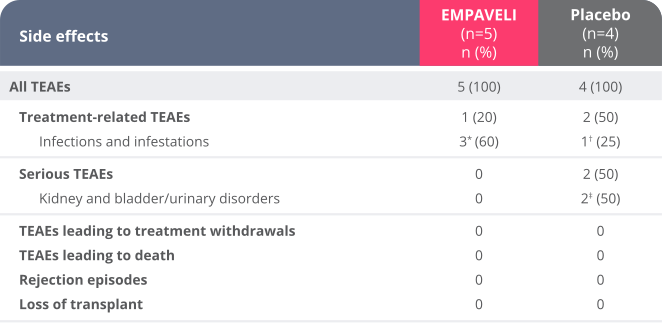
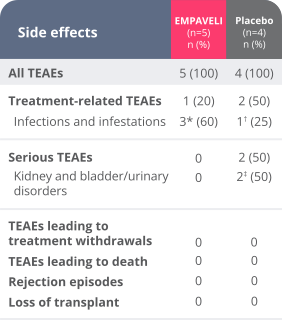
- No treatment-emergent adverse eventsTreatment-emergent adverse eventsA treatment-emergent adverse event (TEAE) means any new or worsening health problem that happens after someone starts a treatment during a clinical trial. led to treatment discontinuation at Week 26 in the RCP in post-transplant patients with recurrent C3G
- In the open-label period, 1 patient with recurrent C3G following kidney transplant developed herpes zoster meningoencephalitis (a rare brain infection that impacts the layer of thin tissue that covers your brain) while on concomitant immunosuppression, leading to treatment discontinuation
- No deaths, transplant rejection, or allograft lossAllograft lossAllograft loss occurs when a transplanted organ (like a kidney) stops working and can no longer support the body. This may mean the person needs another transplant or needs to return to treatments like dialysis. were reported in post-transplant recurrent C3G patients
- Safety and effectiveness of EMPAVELI in patients with recurrent IC-MPGN following kidney transplant have not been established
RCP=randomized controlled period; TEAE=treatment-emergent adverse event.
*Influenza (moderate), nasopharyngitis (mild), and viral infection (moderate); 1 each.
†Nasopharyngitis (mild).
‡Proteinuria and tubulointerstitial nephritis; 1 each.
- Serious side effects due to viral infections resulting in hospitalizations occurred in 2 patients (3%) with C3G or primary IC-MPGN receiving EMPAVELI and 1 patient (2%) on placebo
- One patient (2%) on EMPAVELI with native kidney C3G died because of respiratory failure due to COVID-19 pneumonia (a serious lung infection); there were no deaths in the placebo arm
- The placebo-controlled period of VALIANT was followed by a 26-week open-label periodOpen-label periodA part of a clinical study when both the patient and the researchers know which treatment the patient is receiving. (OLP). During the OLP, 1 patient with native kidney C3G had a serious side effect of pneumonia caused by a type of bacteria called Streptococcus pneumoniae. One patient with recurrent C3G following kidney transplant developed herpes zoster meningoencephalitis (a rare brain infection that impacts the layers of thin tissue that covers your brain) while they were also taking immunosuppression medications, leading to treatment discontinuation
- In a separate trial in 13 adults with recurrent C3G or primary IC-MPGN after kidney transplant, 1 patient with primary IC-MPGN experienced a serious side effect of lung fungal infection known as Pneumocystis jirovecii pneumonia (which can occur in individuals with suppressed immune systems) while on EMPAVELI and while on immunosuppressive medications
*Term includes the following reactions at the infusion site: erythema, pruritus, swelling, bruising, induration, pain, hemorrhage, discomfort, edema, rash, and hypoesthesia.